November 10, 2026
In brief

Morning edition

Daily Brief — November 7, 2026

6 stories 11 min read AI summary

AI labs spent the day on testing and simulation: OpenAI published a benchmark for routine wet-lab analysis, while NVIDIA and Ai2 released open models and data for simulated driving and robot learning. OpenAI also named Hacktron as a new partner to probe its own systems for security flaws, JetBrains brought AI agents into PhpStorm, and Cloudflare outlined quantum-safe anonymous tokens.

More stories today

Why it matters

The key point of each story
  1. AI

    OpenAI releases BioBasicsBench, a 100-task benchmark for AI agents doing routine wet-lab analysis

    Most science benchmarks use clean figures taken from papers, while real lab data is messy and often inconclusive. This test also rewards a model for saying when the evidence is not enough, which is what a scientist needs before trusting an AI helper. OpenAI's own examples show the best model still picks the wrong colonies, ignores data that contradicts it and overcounts colonies by about 12% on one plate.

    Source: OpenAI — Measuring how AI agents handle everyday wet-lab science · openai.com ↗

  2. Cybersecurity

    OpenAI partners with Hacktron to test how its systems connect to third-party services

    This is the second outside team OpenAI has brought in during the same week, after Cathedral joined its next security sprint, and it comes right after OpenAI raised its bug bounty rewards. OpenAI says it first met Hacktron through findings the firm reported to that bug bounty program. As AI agents link more apps, cloud accounts and identity systems, the gaps between them become a larger target for attackers.

    Source: OpenAI — Partnering with Hacktron · openai.com ↗

  3. AI

    NVIDIA adds four open Cosmos 3 Nano models for driving and robot world simulation

    Training cars and robots in the real world is slow and costly, so companies rely on simulated scenes that must look and behave like real ones. Open weights let research teams run and adapt these world models themselves instead of paying for closed tools.

    Source: NVIDIA on Hugging Face — New Cosmos 3 open models for interactive world simulation · huggingface.co ↗

  4. AI

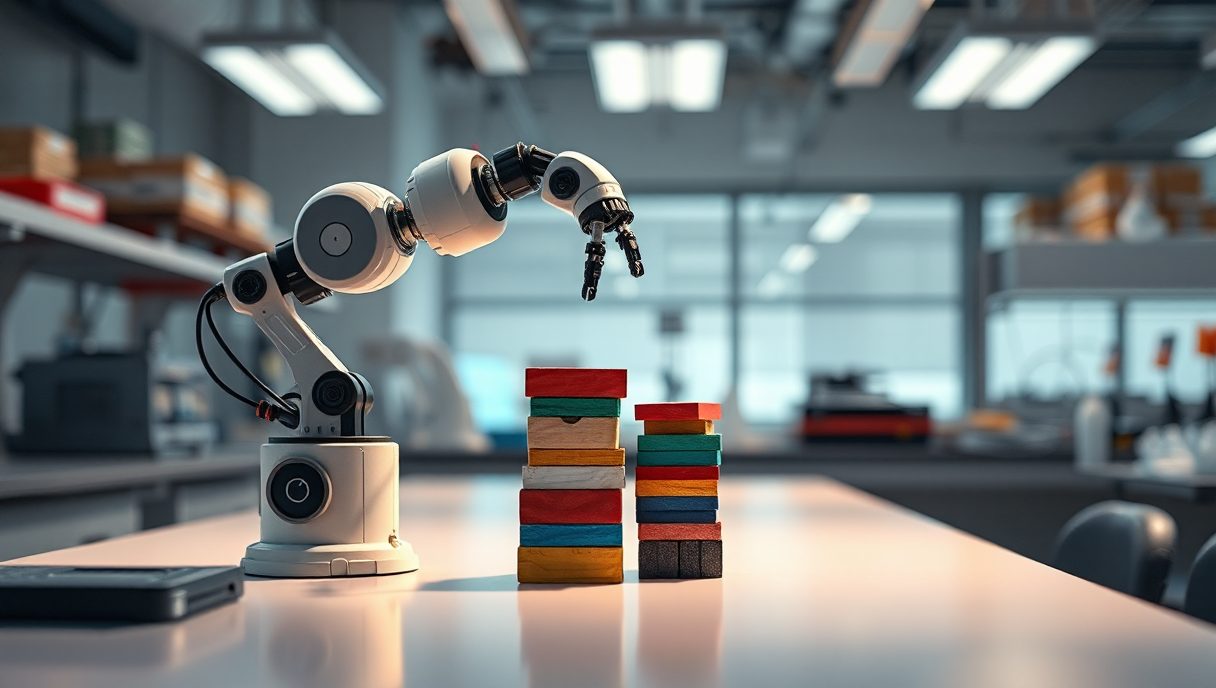
    Ai2 launches ToyBlocks, an open simulation world with 85,336 demonstrations for robot learning

    Robot research is held back by a lack of shared data and fair ways to compare methods. ToyBlocks gives labs a common, controlled world, and Ai2 reports that skills learned in it carry over to a real Franka arm: one policy scored 80.0% in simulation and 81.1% on the physical robot.

    Source: Ai2 on Hugging Face — ToyBlocks · huggingface.co ↗

  5. Development

    PhpStorm 2026.3 adds Air, a workspace for AI coding agents, and support for PHP 8.6

    PHP developers increasingly work with AI agents, and the IDE is becoming the place where their changes are checked before they ship. JetBrains lets people use the agent subscriptions and API keys they already have, so no extra JetBrains AI plan is needed, and a free Junie Lite option works with just a JetBrains account.

    Source: JetBrains — What's New in PhpStorm 2026.3 · blog.jetbrains.com ↗

  6. Cybersecurity

    Cloudflare works on quantum-safe Privacy Pass tokens to keep anonymous anti-abuse checks secure

    Today these tokens rely on classic cryptography such as RSA and elliptic curves. A powerful quantum computer could forge them and bypass rate limits, so the protection behind many "no CAPTCHA" checks would stop working. Preparing the replacement now gives standards bodies time to review it.

    Source: Cloudflare Blog — The post-quantum future of web privacy · blog.cloudflare.com ↗

AI

All →

Development

All →

Cybersecurity

All →

Big Tech

All →

AI-generated summaries from official sources · How it works